

『Flow Meter 6 Inch Flanged Assembly: Industrial Water Line Volumetric Tracking Requirements』Related information(v cone flow meter|rotary gas meter|gallon meter|gear meter|metal tube rotameter|glass tube rotameter|nutating disk meter|transit time ultrasonic flow meter|wedge flow meter|pd meters|hydraulic flow meter|ultrasonic water flow meter|water flow meter|air flow meter|magnetic water flow meter|oxygen flow meter|gas flow meter|argon flow meter|air velocity meter|gasoline flow meter|fuel flow meter|ultrasonic water meter|digital water meter|nitrogen flow meter|solid flow meter|Oxygen tank flow meter|digital water flow meter|diesel fuel flow meter|steam flow meter|02 flow meter|compressed air flow meter|oil flow meter|liquid flow meter)
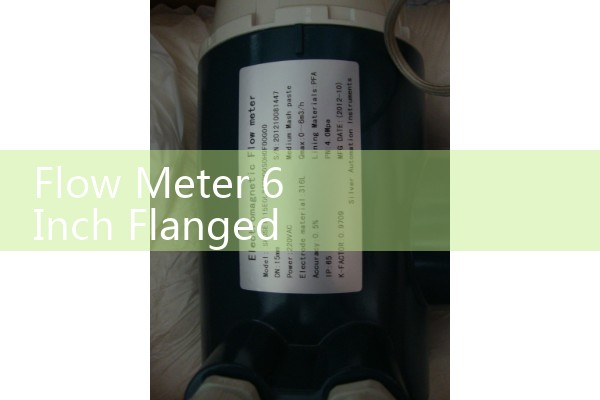
Flow Meter 6 Inch Flanged Assembly: Industrial Water Line Volumetric Tracking Requirements
Quick Answer: A 6 inch flanged assembly on an industrial water line calls for a DN150 full bore electromagnetic flow meter with flanged process connections, 4-20 mA HART output, and a liner that suits the water chemistry. The volumetric tracking loop works best when the meter is sized for 0.5 to 10 m/s flow velocity and installed with a straight inlet run. Send pipe inner diameter, flow range, pressure bar, temperature °C, and pipe size DN to Silver Automation Instruments for a firm quote.
Why the 6 Inch Flanged Assembly Changes Your Meter Choice
A 6 inch line is not a small branch line. The flanged assembly usually means the pipe is permanent metal or heavy plastic pipe with ANSI or DIN flanges. For this size, inline insertion meters create pressure drop and need more maintenance. A full bore electromagnetic flow meter avoids moving parts and keeps the pressure loss close to that of a straight pipe section.
We see many water lines in Southeast Asia and the Middle East where the 6 inch meter is used for main transfer, filter feed, or pump discharge. In those applications the buyer wants repeatability more than a laboratory grade calibration. A DN150 flanged electromagnetic flow meter from Silver Instruments fits that job because it reads volumetric flow directly and does not need compensation for temperature or pressure on a water line.
Here is the thing about flanged assemblies: the face to face length matters. For DN150, common face to face dimensions are around 300 mm for compact designs and longer for standard designs. If you are replacing an existing meter, measure the installed gap before ordering. We have seen a customer in Vietnam order a DN150 flanged meter, then realize the replacement unit was 20 mm shorter. It still worked, but the bolt holes did not align until they used spacer washers.
Volumetric Tracking Requirements That Most Engineers Check Late
Volumetric tracking on a water line means the control system needs a volume total and a flow rate signal. Most plants use the 4-20 mA signal for rate and a pulse output or digital totalizer for volume. For a DN150 flanged water meter, choose a converter with 4-20 mA HART as the main output. Add RS485 Modbus if the plant SCADA system expects a digital total.
Conductivity is another point. Electromagnetic flow meters need a minimum liquid conductivity. Clean water, raw water, river water, and well water are usually fine if conductivity is above 20 µS/cm. Demineralized water or pure condensate may be below 5 µS/cm and can cause unstable readings. If the line carries demineralized water, tell Silver Instruments before quoting because the converter settings and electrode design may be different.
In practice, the flow velocity range matters more than the exact total. Most DN150 electromagnetic meters are linear from roughly 0.3 m/s to 12 m/s. Silver Instruments recommends keeping continuous flow between 0.5 m/s and 10 m/s. Below 0.5 m/s the signal is small and noise matters. Above 10 m/s the water can wear the liner faster, especially if the water contains sand or other solids.
Construction and Liner Selection for a 6 Inch Water Meter
For an industrial water line, a standard DN150 flanged electromagnetic flow meter should have a carbon steel or stainless steel body, a PTFE or hard rubber liner, and 316L stainless steel electrodes. PTFE works well for clean water and some chemical traces. Hard rubber liners cost less and work in raw water, wastewater, and cooling water where abrasive particles are present. For potable water duty, check local compliance for the wetted materials.
Flange ratings depend on the pipe class. Many water lines use PN10, PN16, or ASME Class 150 flanges. A 6 inch flanged assembly in Australia may be PN16, while a project in the Philippines may specify ASME Class 150. Silver Instruments quotes both. The body and flanges must match the mating pipe flange rating and drilling standard. Do not guess the standard. A DIN PN16 meter will not fit an ASME Class 150 flange without an adapter.
The sensor housing should be IP67 for normal outdoor use. If the pit or chamber can flood, use IP68 with a sealed cable length. The converter can be integral or remote. Water line installations near pumps or pipe racks often use a
Installation Points That Affect Water Line Readings
Electromagnetic flow meters need a full pipe. If the pipe drains back after a pump stops, the meter will not read correctly when the pump restarts until the line is full again. This is common on transfer lines that lift over a tank edge. We have seen this on customer sites many times. The solution is to install the meter in a low point that stays flooded or add a back pressure valve downstream.
Straight pipe runs also affect accuracy. For a DN150 flanged electromagnetic flow meter, use at least five pipe diameters of straight pipe upstream and two to three diameters downstream. That means around 750 mm of straight run before the meter in a 6 inch line. Because the meter is full bore, you do not need long upstream lengths like an orifice plate. However, avoid installing the meter directly after a control valve or a partially opened butterfly valve.
Grounding is a practical issue that many electricians skip. A flanged electromagnetic meter on a metal pipe usually needs a grounding ring or the standard ground electrode if the pipe does not have a reliable electrical path. On plastic pipes, grounding rings are required. Check the pipe material before wiring. A rusty or painted flange face can break the grounding path and cause the reading to jump.
Pricing and Lead Time Factors for DN150 Flanged Meters
The price of a 6 inch flanged electromagnetic flow meter depends on the liner, electrode material, flange standard, and converter type. A standard hard rubber liner with 316L electrodes and a compact integral converter is the most cost effective option. PTFE liner, remote converter, ATEX Zone 1 approval, or seawater resistant electrodes add cost. Silver Automation Instruments keeps the standard version in a good price range for water distributors and industrial buyers.
For a normal water line application, a typical DN150 meter with 4-20 mA HART and a local display is small enough to ship quickly. Customers in Australia, Indonesia, Vietnam, the United Arab Emirates, and Nigeria often ask for a complete flange kit and calibration certificate. We can include the certificate at no extra cost for the standard water range. When you send an inquiry, include the flow range in cubic meters per hour, pipe material, flange standard, and cable length if the converter is remote.
Contact Silver Automation Instruments for a quote. Tel: +86-25-68650347. WhatsApp: +86-25-52155837. WeChat: +86 15365082610. You can also visit flow-meter.com.au and send the process data through the contact page.
FAQ
Why choose a 6 inch flanged electromagnetic flow meter for water line volumetric tracking? The full bore design causes almost no pressure drop, has no moving parts, and gives a direct volumetric reading. A DN150 flanged unit fits standard ASME or DIN water line flanges and is easier to maintain than an insertion meter in the same line size.
What flow range should a DN150 water meter handle? In most water lines, a DN150 meter works well from about 10 to 450 cubic meters per hour. The best continuous range for accuracy and liner life is from roughly 30 to 400 cubic meters per hour depending on the actual velocity.
Can I use the same 6 inch meter for wastewater and raw water? Yes, if the liner and electrode material are chosen for the water. Hard rubber liner and 316L electrodes work for many raw water and wastewater applications. For high solids or aggressive water, send a water analysis to Silver Instruments for a detailed selection.
What is the minimum conductivity for a 6 inch water line electromagnetic flow meter? Most standard electromagnetic flow meters need around 20 µS/cm or more. Clean river water, well water, and municipal water are normally above this. Ultrapure water or condensate may not be suitable without special preparation.
How do I request a quote for a 6 inch flanged flow meter? Send your pipe size DN150 or 6 inch, flange standard, flow range, pressure bar, temperature °C, and output requirement to Silver Automation Instruments. Use Tel or WhatsApp or send the data through flow-meter.com.au.
 Hot Blog
 Related AD