

『Emfm Flow Meter Operational Basics: Electromagnetic Flowmeter Industrial Applications』Related information(v cone flow meter|rotary gas meter|gallon meter|gear meter|metal tube rotameter|glass tube rotameter|nutating disk meter|transit time ultrasonic flow meter|wedge flow meter|pd meters|hydraulic flow meter|ultrasonic water flow meter|water flow meter|air flow meter|magnetic water flow meter|oxygen flow meter|gas flow meter|argon flow meter|air velocity meter|gasoline flow meter|fuel flow meter|ultrasonic water meter|digital water meter|nitrogen flow meter|solid flow meter|Oxygen tank flow meter|digital water flow meter|diesel fuel flow meter|steam flow meter|02 flow meter|compressed air flow meter|oil flow meter|liquid flow meter)
Electromagnetic Flowmeter Operational Basics: Industrial Applications
Quick Answer
Electromagnetic flow meters from Silver Automation Instruments measure conductive liquid flow without moving parts. They fit water, wastewater, chemical, food, and pulp processes. Send your pipe size, flow range, pressure, and temperature for a quote.
How an Electromagnetic Flowmeter Works
An electromagnetic flowmeter has a flow tube, two electrodes, and a transmitter. The meter applies a magnetic field across the pipe. The conductive liquid generates a small voltage. That voltage is proportional to flow velocity. The transmitter converts voltage into a flow rate in cubic metres per hour or litres per minute.
The operating principle creates a simple result. No moving parts touch the liquid. No pressure drop comes from a mechanical rotor or gear. The liner and electrodes handle corrosion. Typical liner materials are PTFE, PFA, hard rubber, and ceramic. Typical electrode materials are 316L stainless steel, Hastelloy C, titanium, and tantalum. Minimum conductivity is usually 5 µS/cm. Some designs need 20 µS/cm or more. Oil, gas, and pure water cannot be measured with this meter type.
Emfm Flow Meter Operational Basics in Real Plants
Operators in water and wastewater plants use emfm meters for raw water intake, sludge transfer, and chemical dosing. A water utility in the Philippines installed a DN300 electromagnetic flowmeter on a treated water discharge line. The meter sends a 4-20 mA HART signal to the plant PLC. The flow range was 100 to 1200 cubic metres per hour at 1.2 bar pressure.
In chemical plants the setup often includes a PTFE lining and Hastelloy C electrodes. A paint manufacturer in Vietnam asked us for a DN25 meter for solvent based latex with viscosity around 300 cP. The meter measured 0.5 to 6 cubic metres per hour. The 4-20 mA output drove a batch control panel. We recommended a compact emfm with local display and pulse output.
Most engineers skip the zero calibration on these meters. The emfm does not need a mechanical zero. Wet calibration uses a known volume or a master meter. Dry calibration uses the transmitter internal reference. Our factory calibrates every unit at 10 percent, 50 percent, and 100 percent of flow rate. Accuracy is usually plus or minus 0.5 percent of reading for 0.3 to 12 m per second flow velocity.
Industrial Applications Where Emfm Meters Fit Best
Water and wastewater is the largest segment. Use a rubber lined magnetic flow meter for raw sewage, return activated sludge, and effluent discharge. The electrodes stay flush with the liner. Strings and solids pass through without clogging.
Food and beverage plants use sanitary emfm meters with stainless steel body and PFA liner. A dairy in Australia uses a DN40 sanitary design for milk transfer at 4 °C. The flow range is 3 to 40 litres per second. The meter connects to a CIP system and handles 85 °C hot water cleaning cycles.
Chemical and marine applications often need corrosion resistance. A desalination plant in Saudi Arabia uses a DN150 seawater flow meter for brine reject lines. The meter has a polyurethane liner and titanium electrodes. Flow is 80 to 500 cubic metres per hour. Pressure is 16 bar.
Pulp and paper mills measure black liquor, paper stock, and bleaching chemicals. These liquids have high solids and cause wear. A ceramic liner with tungsten carbide electrodes works in high abrasion applications. We have seen this on customer sites many times. The meter survives longer than a turbine meter.
Selecting the Right Electromagnetic Flowmeter Model
We stock inline models from DN15 to DN2000. Compact and remote transmitter versions are available. For high temperature above 120 °C select a remote transmitter. For tight spaces select compact. For hazardous areas choose ATEX Zone 1 or IECEx certifie
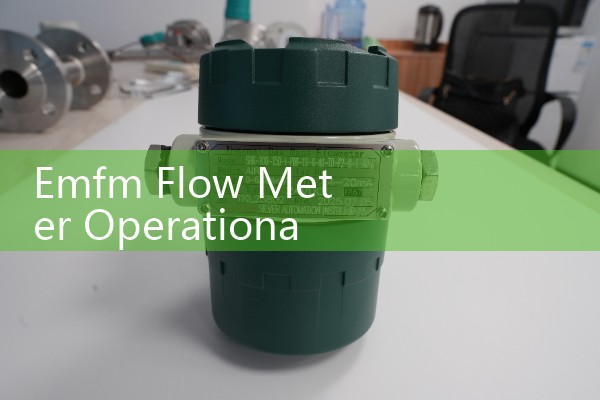
The Silver Instruments SEF series covers most standard water and wastewater jobs. The SEF-H series adds high temperature and high pressure options up to 40 bar. The SEF-S series has sanitary tri-clamp connections for food and dairy. For seawater and brine we use the SEF-C series with special liners and electrodes.
When you send an inquiry, include liquid type, conductivity, pipe size, flow range, pressure, temperature, and solid content. That helps us choose liner and electrode materials. A quick quote needs these details. Our engineers reply within one business day.
Installation Notes for Emfm Meters
The meter body needs a straight pipe run upstream and downstream. Most suppliers ask for 5DN upstream and 2DN downstream. For a DN100 meter that means 500 millimetres upstream and 200 millimetres downstream. Keep the pipe full at all times. Do not install the meter at the top of a vertical drain line or in a low point where air collects.
Grounding is critical for electromagnetic flowmeter performance. Use grounding rings or reference electrodes on lined pipes. For plastic pipe, add grounding rings. The transmitter needs a clean 24 V DC supply. Signal cable runs should be separate from motor cables. We have seen noise from VFD drives cause unstable readings. Use shielded twisted pair cable for the electrode circuit.
For chemically dirty liquids, do not use a meter with a thin electrode. Select a liner that matches the temperature and chemical. PTFE handles strong acids but may not suit high vacuum. PFA adapts better to temperature cycling. Hard rubber is low cost for raw water but not for solvents.
Why Engineers Choose Silver Instruments
Silver Automation Instruments supplies emfm flow meters from our production line in China. We handle calibration, liner selection, and after sales support. We export to Southeast Asia, Oceania, Latin America, Africa, and the Middle East. We work with end users and distributors from 10 to 100 people.
Last year a customer in Colombia asked us to replace a mechanical totalizer on a river water pump. We supplied a DN150 remote type emfm with rubber liner and 316L electrodes. The meter works with a solar powered data logger. The total cost stayed within a tight budget. The customer now orders four more units each year.
FAQ: Five Key Questions About Emfm Flow Meters
What is the minimum conductivity for an electromagnetic flowmeter?
Most units need at least 5 µS/cm. Some models require 20 µS/cm. Below this threshold the signal is too weak. Demineralized water, oil, and gas are not suitable.
Can an emfm meter measure slurries and sludge?
Yes. Slurries, sludge, and pulp are common applications. Choose a rubber or ceramic liner and a robust electrode. The full bore design has no obstructions.
What pipe sizes do you offer?
We offer inline sizes from DN15 to DN2000. Larger sizes are available on request. Send your pipe diameter and flow range for a specific model.
How do I get a price for a seawater flow meter?
Send us your pressure in bar, temperature in degrees Celsius, pipe size as DN, and flow range in cubic metres per hour. We will recommend a liner, electrode material, and quote within 24 hours.
What output signal should I choose for a water network?
4-20 mA HART is the most common for PLC and SCADA. Pulse output works for totalizing. RS485 Modbus suits digital field networks.
Request a Quote from Silver Automation Instruments
Tell us your liquid, pipe size, flow range, pressure, and temperature. We will recommend the right electromagnetic flowmeter model with liner and electrode details. Call us at Tel: +86-25-68650347. Message us on Whatsapp: +86-25-52155837. WeChat: +86 15365082610.
 Hot Blog
 Related AD