

 Current position > News detail
『Sccm Gas Flow Meter Calibration For Laboratory Use』Related information(v cone flow meter|rotary gas meter|gallon meter|gear meter|metal tube rotameter|glass tube rotameter|nutating disk meter|transit time ultrasonic flow meter|wedge flow meter|pd meters|hydraulic flow meter|ultrasonic water flow meter|water flow meter|air flow meter|magnetic water flow meter|oxygen flow meter|gas flow meter|argon flow meter|air velocity meter|gasoline flow meter|fuel flow meter|ultrasonic water meter|digital water meter|nitrogen flow meter|solid flow meter|Oxygen tank flow meter|digital water flow meter|diesel fuel flow meter|steam flow meter|02 flow meter|compressed air flow meter|oil flow meter|liquid flow meter)
SCCM Gas Flow Meter Calibration For Laboratory Use
Quick Answer: Silver Automation Instruments calibrates SCCM gas flow meters with a NIST-traceable piston prover and a Molbloc-L mass flow comparator. A standard calibration run covers 0.1 sccm up to 200 slm for nitrogen, argon, helium, and dry air. Each meter gets a 5-point calibration certificate with as-found and as-left data. Send us your gas type, required SCCM range, inlet pressure, and fitting type. We return a calibration procedure and a fixed price quote the same business day.
Why Laboratory SCCM Calibration Is Not a Factory Preset
A factory default calibration often uses a single gas and two reference points at ambient temperature. That shortcut misses what happens inside a research gas chromatograph or a glovebox purge line. In a real lab you run small flow steps from 2 sccm down to 0.05 sccm. The thermal mass flow sensor can drift 1.2 percent in six months just from room temperature swings in a Thai university lab. We have seen this on customer sites many times. Without a proper multi-point scan you get a zero offset that eats into your mass balance calculation. Most engineers skip this part because the meter shows a number on the display. That number is not always true.
Exactly What We Check During a Traceable 5-Point Run
Our calibration bench reads a Molbloc-L laminar flow element with an uncertainty of plus-minus 0.125 percent of reading. The reference pressure transducer is a Paroscientific Digiquartz with 0.01 percent full scale. We log temperature at the meter inlet and inside the flow path with a PT100 RTD. A full 5-point cycle runs ascending and descending steps at 10, 25, 50, 75, and 100 percent of the customer specified full scale. For a 20 sccm meter that means we check 2, 5, 10, 15 and 20 sccm. We report linearity, repeatability, and uncertainty for each point on the certificate. No generic statement. You get actual measured deviation in percent of reading.
Our Calibration Rigs in Malaysia and Australia
We operate two primary calibration stations. One sits in Selangor, Malaysia, inside a class 100,000 clean area. The second is in Perth, Australia, running 24 x 7 for customers in Oceania and the Middle East. Both facilities reference a master Mollier-plate set verified annually by an ISO 17025 accredited lab. We calibrate with N2, Ar, He, CO2, and dry compressed air with a dew point below minus 40 degree C. For a medical device startup in Singapore we recently ran a 12-point calibration on ten helium sensors used in respiratory testing. The total drift across the batch was 0.4 percent after cycling from 0.1 sccm to 5 sccm. Because we log raw frequency output from the sensor, we can also supply a K-factor map for your PLC or data logger.
A Real Case: Argon at 2 sccm for an ICP-OES
Last month a mineral testing laboratory in Saudi Arabia sent us four thermal mass flow meters for argon. Their ICP-OES required a steady 2.0 sccm nebulizer gas flow. The on-site rotameter showed 2.0 but the element count rate was jumping. Our as-found calibration revealed an actual flow of 1.72 sccm at the setpoint. The drift came from a slow leak in the sensor bypass channel. W
When a Laboratory Flow Meter Needs Recalibration
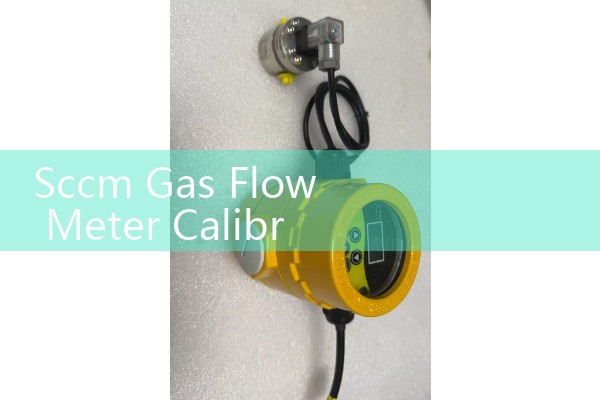
We recommend a recalibration interval of 12 months for most thermal mass flow meters in clean lab environments. If your application touches corrosive gases or high-purity ammonia, cut that to 6 months. A clear signal is when your zero reading under no-flow condition drifts more than 0.05 percent of full scale in an hour. Another trigger is a growing spread between the flow setpoint on your mass flow controller and an independent downstream bubble meter. In practice, a wastewater lab in Vietnam saw a 3 percent shift after a single power surge knocked out the MFCs internal reference resistor. They kept using the meter. It cost them three weeks of failed BOD data. Recalibration after any electrical fault is mandatory, not optional.
Frequently Asked Questions
Can you calibrate SCCM flow meters for aggressive gases like HCl or SiH4?
Yes. We use an inert carrier gas with a validated conversion factor from the sensor manufacturer. We also offer a direct calibration with the actual gas in a vented hood setup for reactive species. Tell us your gas concentration and we will confirm the safe handling protocol.
Do you supply the calibration certificate with an ISO 17025 logo?
Our standard certificate is NIST-traceable and states measurement uncertainty for every test point. We can also arrange an endorsed ISO 17025 certificate through our partner accredited lab for an additional fee. Most university labs accept our standard traceable certificate without issue.
What tube fittings do you support on small SCCM meters?
We calibrate with 1/4-inch, 1/8-inch, and 6 mm Swagelok-type compression fittings, VCR metal gasket face seals, and push-to-connect for PTFE tubing. If your meter has a custom manifold, send us the CAD drawing and we machine a mating adapter block.
How long does a laboratory SCCM calibration take?
Standard 5-point calibration with a pressure test and leak check takes two to three working days. Express service ships within 24 hours for a 30% surcharge. For large batches of 20 units or more, add one extra day for every five meters.
We only need two flow settings for a GC carrier gas. Can you do a 2-point check?
Yes. A 2-point check at your specified flows is quicker and costs less. But we always include a zero verification and a single mid-range point as a free reference. That way you have the minimum data to prove meter linearity without a full certificate.
Send your gas type, required SCCM range, inlet pressure, and connection size to [email protected]. We will return a calibration method, lead time, and a formal quotation within the same working day. For thermal mass flow meters designed specifically for low SCCM lab use, see our product page on the Silver Automation Instruments website.